Tuesday, July 30, 2013

Alison Weir's analysis of New York Times coverage of the Israeli-Palestinian conflict

Another point of view in the debate over journalistic bias in the coverage of the Israeli-Palestinian conflict.  In light of the recent appointment of Martin Indyk--someone who comes from a Zionist background, has strong ties to AIPAC, and who Palestinians distrust--as U.S. envoy for the peace process, we need to consider whether the U.S. can be honest brokers.  Thanks to Marilyn Hacker for sending this along.

Another Journalist with Children in the Israeli Military

by ALISON WEIR
The New York Times recently published a news brief, reporting that Israel is going to re-investigate an incident in which an American citizen, Tristan Anderson, was permanently maimed.


Anderson suffered extensive brain damage (part of his frontal lobe was destroyed) and paralysis, and was blinded in one eye, after Israeli soldiers shot him with a tear gas canister intended as a “barricade penetrator” from inappropriately close range. According to eyewitnesses, Anderson was shot as he was taking photographs in a Palestinian village after an unarmed protest against the illegal and extensive confiscation of village land.
Israeli forces have a history of shooting unarmed protesters with these canisters, which one expert likens to “a small missile.”
Yet the New York Times report, “Israel Reopens Inquiry Into Activist’s Injury” (July 11, 2013, P. 9) reveals few of these details.


The Times article states that Anderson was injured when he was hit in the head by a tear gas canister and is partly paralyzed and blind in one eye, but does not mention his extensive brain damage and that his paralysis is over half his body. It doesn’t reveal that the type of canister used is extraordinarily destructive or that it was fired at such close range.


The report also omits the fact that this incident is part of a pattern, even though Israeli forces have killed at least two Palestinians with these canisters, and shot out the eye of an American student with another. According to a report by an Israeli organization, Israeli forces “frequently fire tear-gas canisters directly at demonstrators.”


The Times report states that the protest was “against the extension of Israel’s separation barrier in the West Bank” without citing the villagers’ actual complaint — the confiscation of their land and, thus, livelihood by Israel. It similarly fails to mention that over previous decades Israel confiscated over 80 percent of the village land and now intends to take between a quarter and a third of what remains to build the “barrier.”
Finally, the Times report repeats, without attribution, the Israeli security forces’ claim that the shooting occurred “during a clash,” implying that it happened accidentally during a violent engagement, ignoring eyewitness testimony that the protest had dissipated and most people had gone home.
The byline on the Times report is Myra Noveck. Noveck has bylined a number of stories for both the New York Times and its European affiliate the International Herald Tribune, where ZoomInfo lists her as a contributor.

Noveck is frequently cited in New York Times news reports as a contributor to stories, and a prominent Israeli newspaper calls her the Times’ “deputy bureau chief” for the Times’ Jerusalem bureau, its bureau for covering Israel-Palestine.

From information she has posted online, it appears that Noveck is an American who moved to Israel after college. According to Torah in Motion, which promotes Jewish dialogue and speakers, two of her children were serving in the Israeli military as of 2012. It is unclear whether her children are currently still on active duty or whether they are now serving as Israeli reserve soldiers.

In either case, it appears that while Noveck has been writing and contributing to news reports about Israel and about the Israeli military, her children have been serving in it.


Such a situation appears to constitute a clear conflict of interest – even according to the Times’ own ethics standards – and should normally cause a journalist to be assigned to a different area of reporting.


When it came to light in 2010 that then chief of the Times’ Jerusalem bureau, Ethan Bronner, had a son in the Israeli military, even the Times’ own ombudsman concluded that Bronner should be reassigned.


In response to requests for information and interviews with Noveck and Times Executive Editor Jill Abramson, a Times spokesperson issued a written statement claiming that Noveck is “not a reporter,” but merely a “long-time news assistant in The Times’s bureau in Jerusalem.”


The statement went on to say:  “She works under the direction of our bureau chief primarily doing translation and research.  She is an Israeli citizen.  If she has children and they are also Israeli citizens, presumably they would be required to serve in the military*.  This situation would not constitute a ‘breach with impartiality.’”


I wrote back pointing out (1) that Times’ conflict of interest requirements include family members and (2) that Noveck’s byline appeared on a news report. The spokesperson then admitted that Noveck “on rare occasions received a byline” but still maintained that “she is not a reporter.”


However, the Times’ published ethics standards generally extend ethical requirements ”to all newsroom and editorial page employees, journalists and support staff alike.”


Reporters Frequently Have Ties to Israeli Military
This incident is part of a pattern of ethics violations concerning reporting on Israel.


Isabel Kershner, a senior Times reporter in the region, is an Israeli citizen whose husband, according to Fairness and Accuracy in Reporting (Fair) works for an Israeli organization, the Institute for National Security Studies (INSS), which has close ties to the Israeli military and is “tasked with shaping a positive image of Israel in the media.”


A FAIR study of articles that Kershner had written or contributed to since 2009 found they had overwhelmingly relied on the INSS for analysis about events in the region.


A multitude of journalists at the Times and elsewhere have had close personal and family ties to the Israeli military – almost none of them ever disclosed, including the previous Times bureau chief Ethan Bronner, as noted above.


Jonathan Cook, a British journalist based in Israel, quotes a Jerusalem bureau chief who stated: “… Bronner’s situation is ‘the rule, not the exception. I can think of a dozen foreign bureau chiefs, responsible for covering both Israel and the Palestinians, who have served in the Israeli army, and another dozen who like Bronner have kids in the Israeli army.”


Cook writes that the bureau chief explained: “It is common to hear Western reporters boasting to one another about their Zionist credentials, their service in the Israeli army or the loyal service of their children.”


For more information on journalists’ pro-Israel conflict of interest violations see ”US Media and Israeli Military: All in the Family,” “Jodi Rudoren, Another Member of the Family: Meet the New York Times’ New Israel-Palestine News Chief,” “Ethan Bronner’s Conflict With Impartiality,” and ”AP’s Matti Friedman: Israeli citizen and former Israeli soldier.”


It would appear from this pervasive pattern that many of the owners, editors, and journalists who determine U.S. reporting on Israel-Palestine believe that normal ethics requirements don’t apply in regard to Israel.


This situation holds serious consequences for the American public. American taxpayers give Israel over $8 million per day (more than to any other country) and, as a result, most of the world views Americans as responsible for Israeli actions, exposing us to escalating risks.


Osama Bin Laden and others have often cited U.S. support for Israeli crimes as a primary cause of hostility against us.


It is thus essential that Americans be accurately and fully informed. This is unlikely to happen while those reporting for American news media (whether “reporters” or “assistants”) have such close ties to Israel and its powerful military forces.


Witnesses Describe Soldiers Shooting Protesters with High-Speed Canisters
Anderson was shot in 2009 after a protest in the Palestinian village of Ni’lin in the West Bank. Since 2007 Ni’lin villagers and others have been demonstrating against the illegal Israeli confiscation of up to a third of the village’s land (following previous confiscations in which the majority of the village’s original land was taken by Israel).

Gabby Silverman, a witness to the shooting of Tristan Anderson, describes the incident: “Tristan had wandered off with his camera. I was looking at him. And out of nowhere, they opened fire on us. The first shot they fired, they got Tristan.”


Anderson is now in a wheelchair with permanent brain damage. He is hemiplegic (paralyzed on the left, formerly dominant, side of his body). He is blind in his right eye and part of his head and frontal lobe were destroyed.


The kind of canister Israeli forces shot at Anderson is particularly dangerous, according to their manufacturer itself. The shells have a range of several hundred meters, yet Israeli soldiers fired at Anderson from approximately 60 meters away.


The canisters’ manufacturer, Combined Systems, Inc. (CSI), classifies them as “barricade penetrators” and advises that they should not be fired at people. A spokesperson for an Israeli human rights organization says, “It’s like firing a small missile.” Because of an internal propulsion mechanism, they hurtle through the air at 122 meters per second.


CSI is reportedly the primary supplier of tear gas to Israel. A watchdog group reports that the company flew the Israeli flag at its Jamestown, Pennsylvania, headquarters until, in advance of a planned Martin Luther King Day demonstration, CSI took it down and replaced it with the Pennsylvania state flag.


According to an in-depth report on CSI by Pennsylvania professor Dr. Werner Lange, the company was founded by two Israelis, Jacob Kravel and Michael Brunn.


A month after Anderson was shot, a Palestinian nonviolence leader was killed by this same type of tear gas canister when an Israeli soldier shot it into the victim’s chest (the fifth Palestinian killed in Ni’lin by the Israeli military in a year and a half).


The next year Israeli forces fired a similar canister at a young American art student, Emily Henochowicz, destroying one eye. An eyewitness reported that an Israeli soldier intentionally aimed the canister at Henoschowitz while she was participating in a nonviolent demonstration.
In 2012 another Palestinian was killed when an Israeli soldier shot him in the face with what appears to have also been a long-range CSI canister.


The occupying Israeli forces have consistently suppressed the Ni’lin villagers’ unarmed protests against the stealing of their land. As of 2012, Israel had arrested more than 350 villagers, killed 5 – including a 10-year-old child – injured “multiple” protesters with live ammunition, and broken the bones of 15 people with tear gas projectiles, according to the villagers’ website, created to document the situation.
There are similar reports from other Palestinian villages, where several other protesters have died from tear gas fired by Israeli forces.


It is unfortunate that almost none of this was even hinted at in Myra Noveck’s New York Times report.
*While military service is required for both males and females in Israel, only about 50 percent actually serve; many Israelis have refused to serve in the Israeli military for reasons of conscience.

Alison Weir is executive director of If Americans Knew and president of the Council for the National Interest. She can be reached through contact@ifamericansknew.org.
For more information on Anderson, videos of the incident, and the latest updates go to http://www.justice4tristan.org/.
Ni’lin is also sometimes referred to as Nilin or Na’alin.

Wednesday, July 24, 2013

Joseph Ross' "Hammering on Rocks"

Poem of the Week:   
Joseph Ross                       
                
Joe Ross                              
Hammering on Rocks  
   
for Nelson Mandela


Hammering  on rocks  
can  break  the  hammerer's  back

when  stooped
under  the  weight  of  identity

cards  the  color  of  scorn.
But  somehow  you  knew

that  the  earth's  breath
drew  in  and  out

with  the  same  rhythm
as  your  own.

Somehow  you  also  knew
the  rocks  you  cracked

into  two  decades'  dust
were  watering  the  country

who  sat  silently  in  your  cell,
more  a  prisoner  than  you.

-Joseph Ross

Used by permission.

From Gospel of Dust (Main Street Rag, 2013)
 
Photo by: Ted Schroll

Joseph Ross is the author of two collections of poetry,Meeting Bone Man (2012) and Gospel of Dust (2013). His poetry has earned multiple Pushcart Prize nominations and the 2012 Pratt Library - Little Patuxent Review Poetry Prize. His poems appear in many anthologies and journals includingCollective Brightness: LGBTIQ Poets on Faith, Religion and Spirituality, Tidal Basin Review, Drumvoices Revue, Poet Lore, and Beltway Poetry Quarterly. In 2007, he co-editedCut Loose the Body: An Anthology of Poems on Torture and Fernando Botero's Abu Ghraib. He teaches in the Department of English at Gonzaga College High School in Washington, D.C. and writes at JosephRoss.net.
 Please feel free to forward Split This Rock Poem of the Weekwidely. We just ask you to include all of the information in this email, including this request. Thanks!

If you are interested in reading past poems of the week, feel free to visit the blog archive.    
Poem of the Week Open Call  

Split This Rock began the Poem of the Week program in October 2009 as a way of publicizing the poets who were to be featured in the 2010 festival. We have since continued the series by featuring the work of participants of our festivals.

This call is open to any poet writing in the socially engaged vein -- festival participant or not.   

Visit our blog for specifics and submission guidelines. 
We look forward to reading your work!
Support Split This Rock 

Please support Split This Rock, the national network of activist poets. Donations are fully tax-deductible. 

Click here to donate. Or send a check payable to "Split This Rock" to: Split This Rock, 1112 16th Street NW, Suite 600, Washington, DC 20036. Many thanks!

Contact info@splitthisrock.org for more details or to become a sponsor.

Friday, July 19, 2013

Split This Rock Poetry contest!

 
Announcing the 7th Annual 
Split This Rock  
Poetry Contest  

Judged by: Tim Seibles 
    
  Poet Tim Seibles  

Benefits Split This Rock Poetry Festival
March 27-30, 2014
$1,000 Awarded for poems of provocation and witness
   

Prizes: First place $500; 2nd and 3rd place, $250 each.

Winning poems will be published on www.SplitThisRock.org, winners will receive free festival registration, and the 1st-place winner will be invited to read winning poem at Split This Rock Poetry Festival, 2014.

Deadline: November 1, 2013
Reading Fee: $20, which supports Split This Rock Poetry Festival, 2014. 

Details: Submissions should be in the spirit of Split This Rock: socially engaged poems, poems that reach beyond the self to connect with the larger community or world; poems of provocation and witness. This theme can be interpreted broadly and may include but is not limited to work addressing politics, economics, government, war, leadership; issues of identity (gender, sexuality, race, ethnicity, disability, body image, immigration, heritage, etc.); community, civic engagement, education, activism; and poems about history, Americana, cultural icons.

Split This Rock subscribes to the Council of Literary Magazines and Presses Contest Code of Ethics. Read it online here.

Submission guidelines:
Submit up to 3 unpublished poems, no more than 6 pages total, in any style, in the spirit of Split This Rock (see above). Please do not put your name or contact information on the poems themselves, only your cover page.


Simultaneous submissions OK, but please notify us immediately if the poem is accepted elsewhere.

Please contact us directly if you are unable to access Submittable at info@splitthisrock.org. 

For more information:   
About the Judge 

Born in Philadelphia in 1955, Tim Seibles currently lives in Norfolk, Virginia. He is a member of the English Department and MFA in Writing faculty of Old Dominion University, and is a teaching board member of the Muse Writers Workshop. He teaches part time for the University of Southern Maine's Stonecoast MFA in Writing Program, and is a teacher at Cave Canem. A highly active ambassador for poetry, Seibles presents his work nationally and internationally at universities, high schools, cultural centers, and literary festivals.

His honors include an Open Voice Award and fellowships from the National Endowment for the Arts and the Provincetown Fine Arts Work Center. 

His poems have been published in literary journals and magazines including Callaloo, The Kenyon Review, Indiana Review, Ploughshares, Electronic Poetry Review, and Rattle, among others. 

Seibles is the author of five books of poetry, including Fast Animal (Etruscan Press 2012), 2012 National Book Award Finalist. He will be a featured poet at Split This Rock Poetry Festival: Poems of Provocation & Witness 2014. 
Support Split This Rock

Please support Split This Rock, the national network of activist poets. Donations are fully tax-deductible. 

Click here to donate. Or send a check payable to "Split This Rock" to: Split This Rock, c/o Institute for Policy Studies, 1112 16th Street NW, Suite 600, Washington, DC 20036. Many thanks!

Contact info@splitthisrock.org for more details or to become a sponsor.

Split This Rock
www.SplitThisRock.org
202-787-5210 info@splitthisrock.org

Sunday, June 23, 2013

Peace to you, John Kelly


John Kelly
One of the eye-opening developments in the ongoing transformation of the conflict in Northern Ireland has been the journey of John Kelly, whose brother was murdered during Bloody Sunday in 1972. He's been running the Museum of Free Derry for many years. 

Some years ago, when first meeting him, a colleague ( Richard Clark) asked, "you seem pretty angry. What would it take for you to forgive the British?" 

He replied then: "I'll never forgive the bloody British bastards." 

Two years ago, after the Saville Inquiry exonerated his brother (and all the protesters), he was elated, was joyous. And this time, a calm seemed to have descended upon him. "The main priority for me was the declaration of innocence. And once we got that there, it eased the pain of it. But now we're waiting for the next part [the criminal trial] of the process to be finished and hopefully, at the end of that process, I can walk away. And say that I done my best."

Wednesday, June 5, 2013

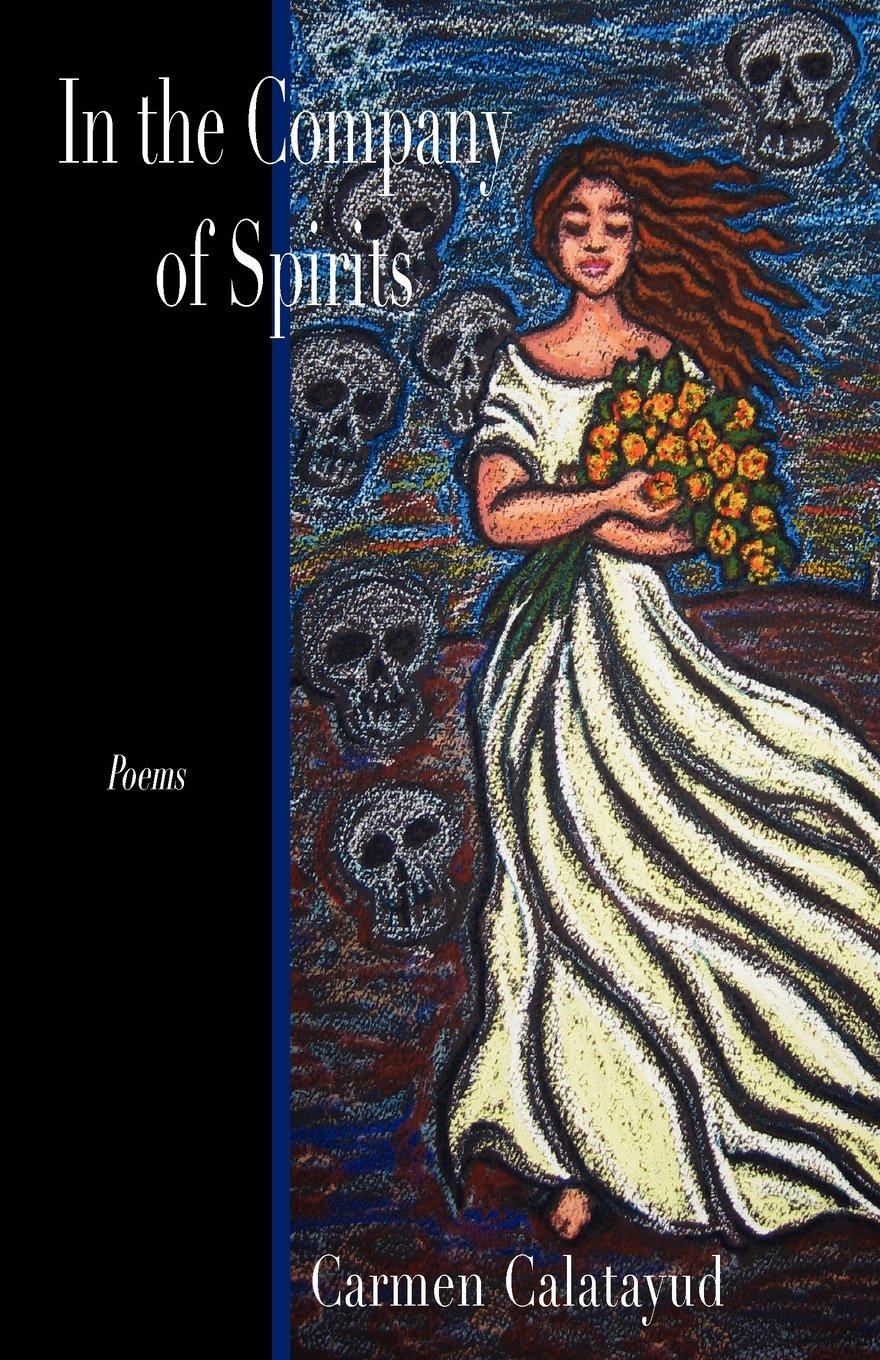
"Afterflood" by Carmen Calatayud

Afterflood
by Carmen Calatayud


I slogged through lakes to get
beyond the highways.
Each curve turned into a situation
dying for attention and lace.
No, I can’t drink.
My words were chunks of liver,
blasted by heavenly structure
but now my voice is butter.
Without soreness,
I sing to hold god in my mouth.
Even while hearts are nailed to the fence,
I hear the cadence of each beat.
Love explodes and is tender as an infant’s shoe,
begs us to walk down the street
listen to the dead in the heavy rain,
absorb the stain of water.

Copyright 2012 Carmen Calatayud from In the Company of Spirits

First appeared in Cabin Fever: Poets at Joaquin Miller’s Cabin Anthology

Friday, May 31, 2013

"Encounters" by Hedy Habra, from Tea in Heliopolis


"Encounters" by Hedy Habra, from Tea in Heliopolis


In the tower of a restored Italian cloister a bourgeois restaurant
flourishes in its loggias I meet the high dignitaries of my adventures
my djins and afrits

We're trapped in the basement of a building in Beirut with many
unknown families we'll have to cross the street at dawn
to change shelter during the next truce

In a car parked in a dark alley a hand slowly outlines my eyes
the bridge of my nose lingers at my lips and neck
everyone hears my heartbeat

Alone in my bed again crying I hit with my fists the indifferent wall

On an indefinite sheet of water surrounded by two lines of rowers
she watches the rhythmic synchronized movements
of their gigantic oar
the boat barely touches the surface 

Your smile tells me in a stairwell "You haven't changed in twenty
years you stood it all well"

it's getting harder to sit i become heavier every day i'm no longer
good for anything anymore i'd like a small drop to warm
my heart up children bring my shawl please

We walked hand in hand over brittle pine needles wild oregano
in bloom thorny umbels swarming with shiny ants


it’s impossible my house isn't for sale i'll never sell 

Wednesday, May 29, 2013

On Zaqtan's predicament of travel...

May 29, 2013

To the Canadian government,

I recently learned of your denial of visa to the acclaimed poet Ghassan Zaqtan, who was intending to attending the Griffin awards as his book of poems Like a Straw Bird It Follows Me (translated by Fady Joudah) has been shortlisted for the Griffin Poetry Prize.

According to my sources, the reasons for denial are dubious.  Being on a shortlist for this prestigious Canadian prize is most certainly a reason to grant a visa.  The notion that Zaqtan might have uncertainty regarding his desire to return to his place of origin feels a little absurd in the case of Palestinian nationals, many of whom live in exile and long to return to their (and their forbears') places of origin.

Zaqtan's poetry is a meditation on the predicament of exile and disappearance, as his poem, "A Graphic 1995" so aptly demonstrates:

The endings are not ours
not anyone's.

Endings belong to strangers
who weren't born on wagons,
people we find in the dust of corridors
and who happen in speech

people who are born from shadows
and unraveling mats.

And while we were plowing
they were laughing
and filling our pockets with dirt.

I ask the Canadian government to reconsider its decision to reject Zaqtan's application for a visa, and make a different ending to this predicament. 

Sincerely,


Philip Metres

Monday, May 20, 2013

The Attack Upon Persis Karim

My colleague and friend Persis Karim, who recently (April 2013) held a workshop on teaching the Israeli-Palestinian conflict at San Jose State University, has been targeted and defamed in various ways by people inside and outside the university.  The workshop, which I attended and at which I presented, was an interdisciplinary exploration of various methods of teaching the conflict in high school and college.  It was fair-minded and quite balanced, to my mind, in its inclusiveness.  

The latest idiocy against Karim is that a fake press release has been issued as if authored by her and others.  The "humor" (very much in quotations) behind this is to expose Professor Karim as someone who secretly is really "after" Israel, because after all, all these other Arab and Muslim countries have numerous human rights violations, but only Israel gets blamed and boycotted.  While there is truth to the fact that many Arab and Muslim countries are serious violators of human rights, the idea that any pro-just-peace advocate of the Israeli-Palestinian conflict would turn a blind eye to such violations is simply ridiculous.  In the end, this "news release" betrays its writer as someone who has swallowed wholesale the crude Orientalisms that lump all these Muslims and Arabs into one unhappy and indistinguishable lump of miserable inhumanity.  It overlooks very real sanctions already levied by the U.S. government against human rights violators like Iran.  


Again, this is FAKE.


Americans for Boycotting Arab and Iranian Goods
  

                                   News Release

No. NR -  329,994
For Immediate Distribution
Updated and Revised at 0900 Hrs EST


WASHINGTON,  May 14 --  A new boycott campaign against the Arab world and Iran requiring the cooperation of every supporter of Middle East freedom has been successfully launched by a group of outspoken Americans, it was revealed this week by its founders.
 
            "It is high time we exposed the crimes against humanity committed by the modern pharoahs of the Muslim Middle East.  Hosni Mubarak, who enslaved the long-suffering Egyptian people with a 30-year dictatorship that is unprecedented in modern history has now been ousted but a reactionary Islamist junta has seized power in his stead. Libyan dictator Mouammar Gaddafi has been throttled but democracy has yet to bud in his country.
 
           Meanwhile Algeria, Morocco, Bahrain, Yemen, Syria, Iran, Saudi Arabia, Kuwait, Oman,Tunisia, Gaza, the West Bank and Jordan are being ruled by hereditary fascist thugs and usurpers who are massacring their own people ," stated prominent Middle East activist Prof. Persis Karim.
 
            Speaking to hundreds of Muslim Americans in front of the Syrian embassy, Karim excoriated the Arab and Iranian regimes for plundering their countries of their wealth and depriving their people of their basic human rights. She particularly upbraided Egypt, Saudi Arabia, Bahrain, Syria and Iran for their entrenched system of apartheid against their Christian Copt,  Berber, Shia and Kurd populations.
 
           The political science professor at California's San Jose University lamented the thousands of civilians massacred by the Arab and Iranian security forces in the streets of Algiers, Alexandria, Cairo, Port Suez, Aleppo, Latakia, Damascus, Homs, Teheran, Manama,  Amman, Jeddah, Gaza City, Aden and Sanaa.
 
           "It is simply incomprehensible that these bloodthirsty regimes are committing genocide against their own people," she declared.
 
             As a consequence, her new organization -- Americans for Boycotting Arab and Iranian Goods (ABAIG) --  has demanded that all US importers immediately terminate their contracts for the purchases of petroleum, petrochemicals, plastics, cotton yarn, towels and garments, rugs, fertilisers, majhool dates, figs, strawberries, taboule, couscous and sheet metal from these countries. In addition, all US firms with investments and joint ventures in these tyrannies, including Chevron, Standard Oil, Boeing and Starbucks, are being pressured to divest their assets from them.
 
            Of greater importance is our campaign for the US to implement new sanctions by halting its tank and missile weapon shipments to the Nazi-like governments of Bahrain and Saudi Arabia. 
                 
           "We are now happy to report that the American people is supporting our initiative until the vicious dictatorships of the Arab Middle East and Iran are overthrown and their civilian populations are finally endowed with classical democracy," Karim affirmed. She particularly lauded President Obama for ordering the divestment of US corporations and personnel from Syria and the Administration's arms shipments to the brave revolutionaries fighting against President Assad's killing machine.
 
           "The welfare of the beleaguered Arab and Iranian people must be our number one priority. It is vitally urgent that the international community quickly bring the genocidal dictators Assad and Ahmadinejad to the gallows, just as Osama Bin Laden was so speedily dispatched, " she stated.
 
          She also warned against allowing the criminal Fatah and Hamas factions continuing to rule in Palestine. They operate deathly prisons and torture chambers. She repeated her insistence that their undemocratic leaders be ousted and be hauled before the International Criminal Court in the Hague for their despicable war crimes detailed in the Goldstone Report. 
 
          The new boycott campaign is supported by the Presbyterian Church, American Freedom Radio, Ralph Nader, the Association of Arab Professors in the USA and Canada, Prof. John Mearsheimer of the University of Chicago, filmmaker Michael Moore, Friends of Middle East Democracy,  the International Solidarity Movement,  Counterpunch Magazine, the Nation, the League for Iranian Democracy, American Women Against Saudi Gender Apartheid, the Syrian Observatory for Human Rights, the Libertarian Party as well as by the American Muslim Congress. 
       
          ABAIG co-founder Joshua Schott, a miltant student at Stanford University, has from his early youth been a crusader for the seething Arab masses of Gaza and the West Bank. He pointed out that the illegitimate Arab government leaders of the Middle East are being targeted by his bevy of activists with arrest warrants should they step foot on American soil or seek asylum here. Under the international laws of universal jurisdiction, war criminals and their genocidal ilk are liable to arrest upon the deposition of a citizen's complaint before the Secretary of Homeland Security.
 
           The former Montana native emphasized that his group's actions were in complete fulfilment of the treasured American tradition of seeking justice for suffering humanity.  Moreover, it has the complete approval of his political mentor former President Jimmy Carter.
 
            In that regard, he echoed the call on the international community to prepare the gallows for Bashir Assad, the fascist ruler of Syria who is bombing his own people as well as thousands of Palestinian refugees with war planes and the sarin nerve gas agent, as well as for the nuclear outlaw Ahmadinejad of Iran.
 
           "These greasy rats  should be torn limb from limb," he declared to tumultuous applause before the Washington demonstrators.   
 
            Schott also singled out the apartheid oppression inflicted by the Lebanese government against the Palestinian refugees in its midst, an act advised and consented to by the illegitimate para-state organisation Hizbullah.
 
           Casting aside his enmity towards Israel, Schott pleaded with the Jewish state to invade Syria and Iran and wipe out their respective Alawite and Shi'ite feudal ruling classes. "Only such a humanitarian gesture under the UN's Responsibility to Protect Doctrine can have the desired effect of strengthening the region-wide intifadas in these countries leading to the toppling of their authoritarian regimes,'' he posited. 
 
           "As for our myriad of friends amidst the general public, we do sincerely thank them for embracing the boycott of Arab and Iranian goods which will immeasurably assist in the  liberation of the beleaguered Arab and Iranian masses, " Karim and Schott concluded.


                                                                         - 30 -


 Media contacts:
 
 Persis Karim
 Founder ABAIG
 Prof. San Jose State University
 San Jose, CA
 persis.karim@sjsu.edu
 
 Joshua Schott
 Co-founder ABAIG
 Stanford University Student Association 
 jdschott@stanford.edu
 
 Prof. John Mearsheimer
 University of Chicago
 Chicago, IL
 j-mearsheimer@uchicago.edu
   
 Jeremy Hammond
 Editor, Foreign Policy Journal
 USA
 jrhammond001@hotmail.com
 
 Jesus T. Vasquez
 Director of Communications
 j.terrencevasquez@gmail.com
 San Francisco, CA
 
 Guaranteed Distribution to 450,000 media, government and NGO activists around the world via Internet, Twitter, Facebook, My Space.